
Introduction
The most expensive thing a lot of Markham families own is not their house. It is a number they have in their head that turns out to be wrong.
I hear some version of this almost every week. We would love to move but we just cannot afford it right now. And almost every time, when we actually sit down and look at the numbers together, something shifts. The number they have been holding onto is not today’s number. It is a number from the peak of the market in 2021 or 2022. A number that no longer exists.
That is not a financial problem. That is an anchoring problem. And once you see it, the whole conversation changes.
The number in your head is from a different market
Here is what I see more than anything else when a family tells me they cannot afford to move. They did the math once, probably two or three years ago when the market was at its peak, and the gap between what they could sell for and what they needed to buy felt impossible. So they stopped looking.
The market has changed significantly since then. Prices have softened. That means two things are different now from what they were in 2021. What you will sell for is lower than the peak. But what you will pay for your next home is also lower, and on a more expensive property, that gap closes faster than most families expect.
I covered the full math on this in a previous post. The short version is that in a softer market, your net cost to move up, the actual difference between what you sell for and what you pay, can be significantly lower than it was when the market was hot. In some cases $200,000 to $300,000 lower.
If you want to see the full breakdown with real numbers, I wrote it here. Read that alongside this post and the picture becomes complete.
But this was never really about the money
Here is the question I ask every family once the math conversation has settled. What matters most to your family right now?
Almost every time, the answer is some version of the same thing. Time together. Being present. Not running from one thing to the next. Feeling like there is enough space, physically and mentally, to actually enjoy each other.
And then I ask the harder question. How much of that are you losing every day in the house you are in right now?
That is where the real conversation begins.
Two families, two decisions
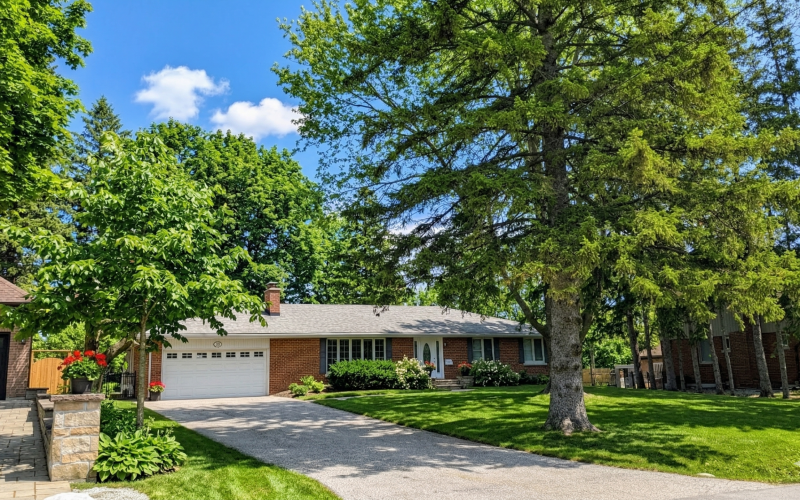
I worked with a family a while back who kept telling me they could not justify the cost of moving. The numbers felt too tight. We went through the math and it was closer than they thought, but the thing that finally shifted the conversation was not the math at all.
It was when they started talking about their mornings. Getting three kids ready in a house that was too small for them, rushing to drive to school across town, the stress of traffic, the scramble of pickups. One of them said they could not remember the last time they had a relaxed morning.
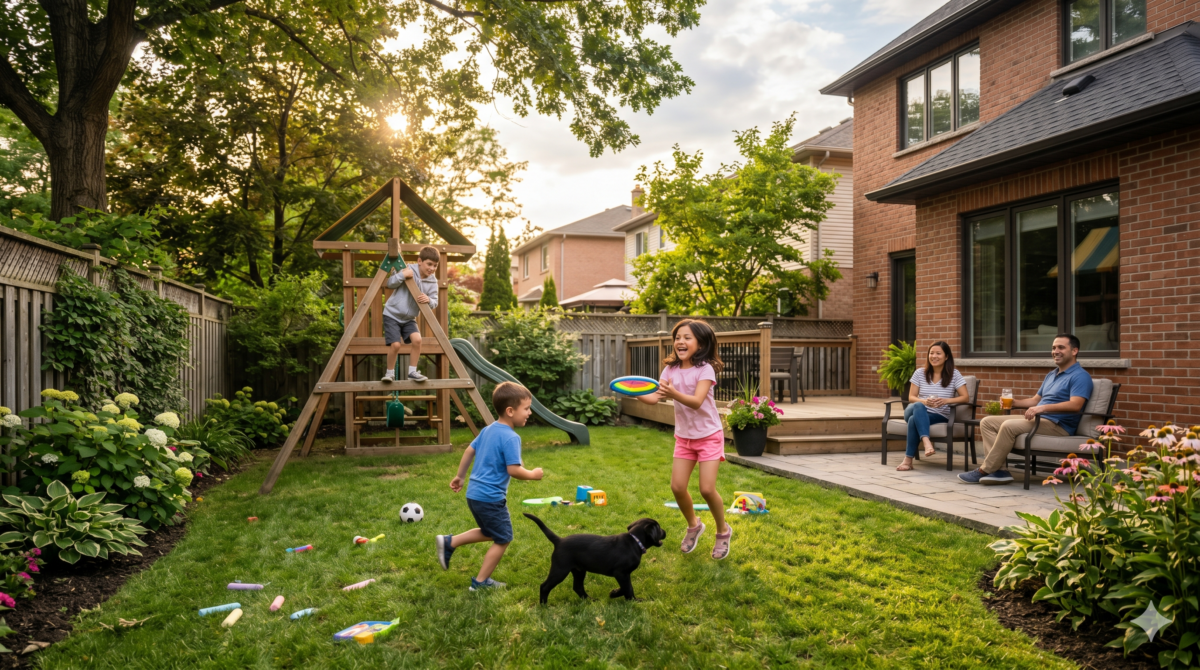
They moved to a neighbourhood within walking distance of the school. Within a few months their kids were walking there on their own. The family started having lunch together some days because home was five minutes away. When summer came, other kids came to their house because they had a pool and a backyard. They knew exactly where their kids were. They were there.
That is not a square footage story. That is a life story.
Another family I worked with moved to a quieter street. Their kids had not been able to play outside at their old address because the traffic was too heavy and the street was too busy. After the move, the kids were outside every evening. Neighbours knew each other. The family was calmer as a unit simply because they were not on top of each other inside and they were not rushing everywhere outside.
Neither of these families would have described their problem as financial. But both of them had been telling themselves they could not afford to solve it.
The cost of staying in the wrong house is not on your mortgage statement. It shows up in your mornings, your evenings, and the time you are not getting back.. |
What are you actually spending every day you stay?
This is the reframe that changes things for most families. The question is not whether you can afford to move. The question is what staying is costing you.
It costs time. The commute that eats your mornings. The school run that takes 40 minutes when it should take 10. The activities spread across a city that was never designed around where you actually live.
It costs energy. The friction of a home that does not fit your family. Kids sharing rooms they have outgrown. A kitchen too small for a family that actually cooks together. A backyard that does not exist or does not work.
It costs presence. When the logistics of your daily life are fighting against you, you arrive places already depleted. The version of yourself that shows up at the dinner table is the leftover version, not the one you want to be.
None of that shows up in a financial calculation. But it is real. And unlike a mortgage payment, it does not build equity. It just accumulates.
The backwards test
There is one question I come back to with every family who is on the fence. If you stay in your current home for another three years exactly as things are right now, will that have been the right choice?
Not a comfortable choice. Not the safe choice. The right choice.
Most families, when they sit with that question honestly, already know the answer. They came to me because staying is not working. The fact that moving feels uncertain does not change what staying is costing them.
The uncertainty of moving is real. But the cost of not moving is already happening. Every day. You are just not getting an invoice for it.
So what does the math actually look like for your family?
Every situation is different. I am not going to tell you that moving always makes sense or that the numbers always work out. Sometimes they do not and I will tell you that directly if that is the case.
What I will tell you is that the number in your head is probably not today’s number. And the real cost of staying is probably higher than you have calculated. Both of those things are worth looking at before you decide.
DM me the word NUMBERS and let's run your actual numbers together. No cost, no pressure, no obligation. Just the real picture.
DM me the word NUBMERS and let’s run the numbers together.
